

Blue Lotus: The Sacred Flower of Awakening
Ancient Egypt's flower of intuition, dreaming and rebirth, and the quiet, blue-violet heart of our Blissful Intuition blend.
Blue Lotus (Nymphaea caerulea) is a sacred water flower of the Nile, revered for thousands of years as a symbol of awakening, intuition and the journey of the soul. She opens with the morning sun and closes again at dusk, a living emblem of rebirth.
In the words of our founder Sharon, Blue Lotus is "so much more than a beautiful flower. She is a portal, a myth, a medicine, a map." We bring her into Blissful Intuition, where she meets ceremonial cacao, lavender and vanilla to soften the mind and open the heart.
A Water Lily of the Nile
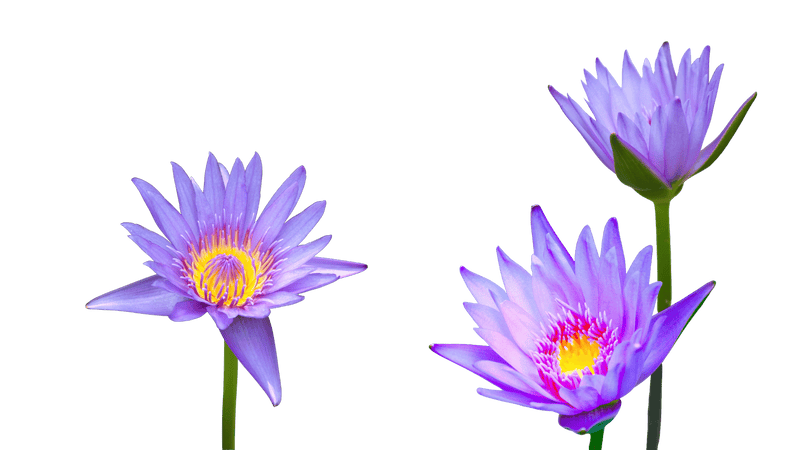
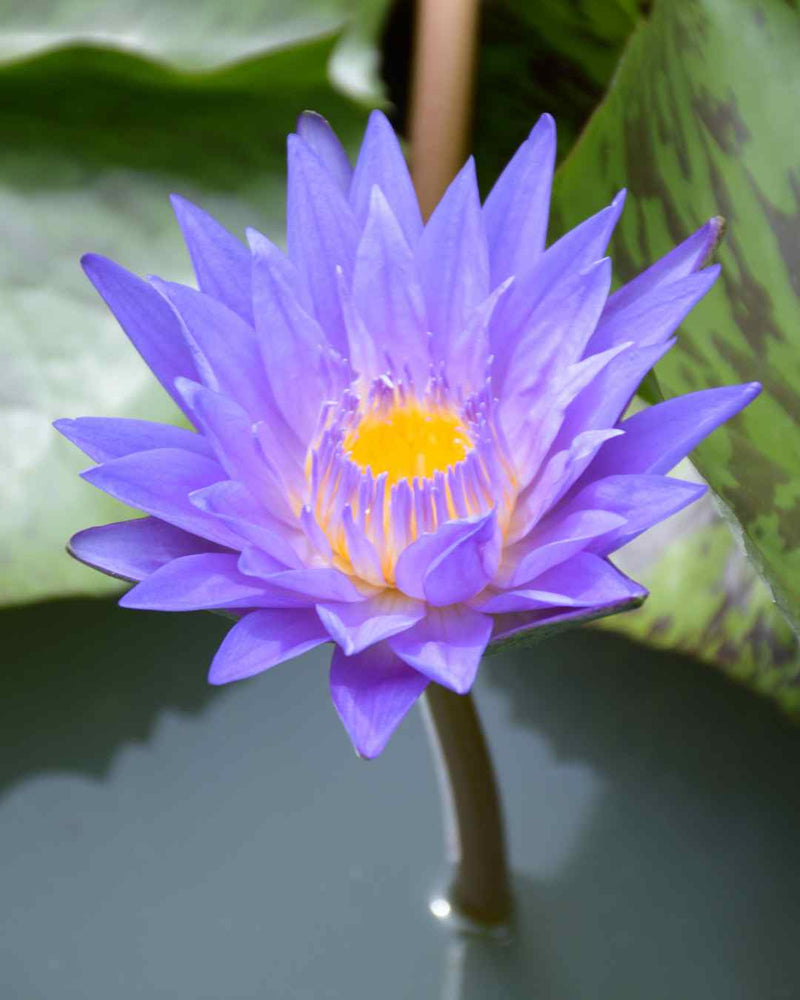
Despite her name, Blue Lotus is botanically a water lily (Nymphaea caerulea), native to the Nile and other waters of East Africa. She is known for her luminous blue-violet petals, golden centre and a soft, gently sweet aroma.
What sets her apart is her rhythm. Each morning she rises from the still water and opens to the light; each evening she folds inward and sinks beneath the surface. To the ancients, this daily breath mirrored the eternal cycle of life, death and renewal.
Traditionally the petals and flowers were steeped into teas and wines, or burned as temple incense. It is those petals, and nothing else, that we use.

Born of Still Water and Light
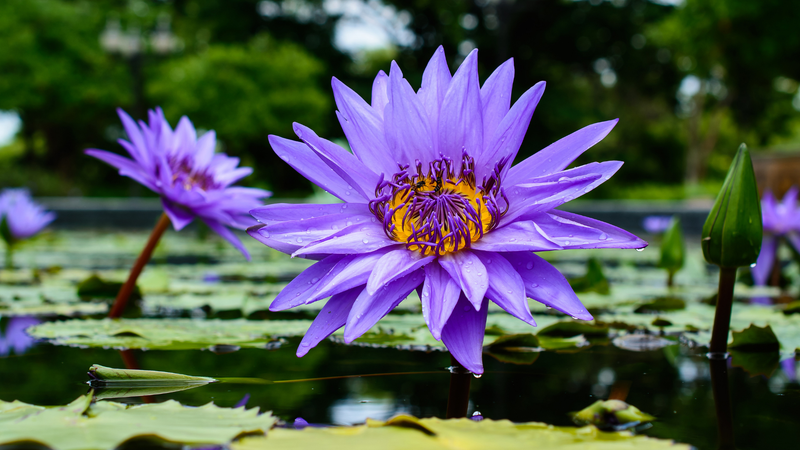
Blue Lotus belongs to calm, sun-warmed waters. From the Nile of her origins to the lily ponds of South Asia, she opens only in the presence of light, reaching toward the sun with quiet reverence before closing again at dusk.
Wildcrafted and Spiritually Honoured
We source our Blue Lotus only from trusted growers who respect this ancient plant ally. Our flowers are wildcrafted and sustainably harvested, then hand-dried to gently preserve their delicate aromatic compounds.
They are 100% pure, free from additives, and ethically gathered with care for the local ecosystems and the communities who tend them. By choosing our Blue Lotus, you support sustainable plant traditions and people who care for the Earth.


The First Bloom of Creation
In Egyptian cosmology, creation itself rises from Nun, the primordial waters of darkness. From that stillness blooms a lotus, and from the lotus emerges Nefertem, the youthful god of healing, fragrance and light, crowned in blue petals. His name means "Perfect Beauty."
Each day, Nefertem was said to offer the Blue Lotus to Ra, the sun god, to soothe his soul as the solar barque sailed across the heavens. The Papyrus of Ani, the Book of the Dead, sings: "I am the pure lotus which comes forth from the Sun, I am the god of the lotus, the soul of Ra, the creator of light."
In Temples and the Afterlife
To walk ancient Egypt is to wander a sanctuary of bloom carved in stone. The Blue Lotus was painted on scrolls, etched into architecture, and laid with the dead as a promise of return.
Lotiform Columns
At temples like Luxor and Karnak, great pillars were shaped like bundled lotus stems, rising from stone as if from water. Each column stood as a prayer in form: souls rising, consciousness awakening.
The Temple of Dendur
Now in the Metropolitan Museum of Art, its Ptolemaic lotus capitals still draw the eye upward, uniting sky and stone, breath and eternity.
The Tomb of Tutankhamun
When the boy-king's tomb was opened in 1922, garlands of Blue Lotus were found among the golden wrappings, laid across his chest not for beauty but for remembrance, to guide the soul through the waters of the afterlife.
The Book of Gates & the Amduat
In the great funerary texts, the soul travels twelve hours of night with Ra and rises again at dawn. Just as the lotus closes at night and opens with the sun, she became a symbol of the soul's descent and return.
"To live like the lotus is to breathe with the cosmos: opening, closing, remembering."
The Blue Lotus does not bloom all at once. She waits, opening only in the light, then folding inward at dusk to rest beneath the water. The ancients saw in this a sacred pattern: that retreat is not the opposite of growth but part of it, that rebirth is not a single peak but a devotion to returning, again and again, to what is true. She teaches that resilience is not resistance. It is rhythm.
The Gentle Chemistry of the Flower
Blue Lotus is not psychedelic. Her character comes from two gentle, naturally occurring alkaloids, shared here as composition and as the focus of ongoing research, not as health claims.
Aporphine
A naturally occurring alkaloid in the flower, of interest to researchers studying its gentle, calming character.
Nuciferine
The second of Blue Lotus's signature alkaloids, long associated in tradition with relaxation and ease.
Gentle by nature
Unlike psychedelics, Blue Lotus has always been valued as a soft, subtle ally, a flower of calm rather than intensity.
Dreamwork, Stillness and Inner Listening
For the priests and priestesses of Egypt, Blue Lotus was a flower of intuition, woven into temple ceremony to deepen meditation and open the inner eye. That lineage continues today: she is most often worked with in moments of transition, before sleep, in meditation, or in quiet personal ritual, when the mind softens and deeper layers of awareness rise.
Many people turn to Blue Lotus for dreamwork and reflection. Her nature is to soften without force, inviting symbols and insight to arise gently rather than being chased. In ceremony she is not used to escape life, but to meet it with more sensitivity, trust and presence. These are traditional and ceremonial associations, shared as heritage rather than as claims.
Blissful Intuition
Our Blue Lotus is the heart of Blissful Intuition: ceremonial cacao infused with Blue Lotus, lavender and vanilla. It was created for moments of stillness, inner listening and emotional integration, an invitation to slow down, soften the nervous system and enter ritual gently.
Energetic profile: calm, intuitive, softening, dreamy, heart-opening.
Sensory notes: floral, soft, soothing.
Discover Blissful Intuition
An Evening Ritual for Dreaming
Blue Lotus loves the quiet of evening. Treat this as a gentle close to your day, not a task.
Measure
Add one heaped tablespoon (around 15 to 20 g) of Blissful Intuition to your favourite mug.
Warm
Heat 200 to 250 ml of water or plant milk to just below a simmer, never boiling.
Whisk
Pour over and whisk until smooth, scattering a few blue petals on top if you wish.
Surrender
Wrap both hands around the cup, breathe, and let the day soften before you rest. Not before driving.
The Botanical at a Glance
| Botanical name | Nymphaea caerulea |
|---|---|
| Common names | Blue Lotus, Blue Egyptian Water Lily, Sacred Blue Lily |
| What it is | A water lily (not a true lotus), native to the Nile and East Africa |
| Part used | The dried petals and flowers |
| Origin | Wildcrafted and hand-dried (Sri Lanka) |
| Compounds of interest | Naturally occurring alkaloids: aporphine and nuciferine |
| Found in | Blissful Intuition cacao blend (with lavender and vanilla) |
| Best enjoyed | In the evening or in quiet ritual, never before driving |
| EU classification | Sold as a food supplement |
Blue Lotus Questions, Answered
Is Blue Lotus psychedelic?
What does it taste like in Blissful Intuition?
When is the best time to drink it?
Does it contain caffeine?
Is it suitable for vegans?
Who should avoid it?
Important Safety Notes
Blissful Intuition is a food supplement. Keep to the recommended daily portion shown on pack and do not exceed it. Keep out of reach of young children. A food supplement is not a substitute for a varied, balanced diet and a healthy lifestyle.
Blue Lotus can feel gently relaxing and may cause drowsiness, so enjoy it when you can rest and do not drive or operate machinery after drinking. Please do not use it, and speak to your doctor first, if you are pregnant or breastfeeding, if you take medication that affects serotonin or dopamine (such as antidepressants or MAOIs), or if you are sensitive to gently psychoactive herbs. Best avoided with alcohol. If in doubt, always consult a qualified healthcare professional before use.
The information on this page is shared for educational and cultural interest only. It is not medical advice and is not intended to diagnose, treat, cure or prevent any disease. Food supplements are not a substitute for a varied, balanced diet and a healthy lifestyle. Always consult a qualified healthcare professional before use if you are pregnant, breastfeeding, or taking medication.
Explore Blue Lotus Further
Books and films for the curious heart. These are external resources, shared for interest and not as health claims by Herbal Cacao.

Book · "Awakening Osiris"
Normandi Ellis's luminous rendering of the Egyptian Book of the Dead.
Find the book →
Book · "The Book of Symbols"
An archetypal exploration of the lotus as a flower of light and rebirth.
Find the book →
Sources & Further Reading
Blue Lotus sits where ancient myth meets modern curiosity. If you'd like to explore, here are trustworthy starting points. These are independent sources, shared for education, not health claims by Herbal Cacao.
- Scientific researchPubMed, peer-reviewed studies on Nymphaea caerulea and its alkaloids (aporphine, nuciferine). pubmed.ncbi.nlm.nih.gov
- Mythology & historyWorld History Encyclopedia, the Blue Lotus in Egyptian cosmology, temple art and funerary rites. worldhistory.org
- Traditional useUS National Center for Complementary and Integrative Health (NCCIH), on traditional and complementary plant use. nccih.nih.gov
- Primary textNormandi Ellis, "Awakening Osiris: The Egyptian Book of the Dead" (quoted in our journal).
 Begin the ritual
Soften Into Stillness
Dreamy Blue Lotus, woven through ceremonial cacao, lavender and vanilla.
Get your Blissful Intuition